
The Relationship Guide
How to Reconnect With Your Adult Sibling
By The CustomLove Team · 5 min read ·
Marcus and Elena grew up sharing a bathroom in San Antonio and fighting over the front seat. Now he's 38, a chemistry teacher with two little kids; she's 35, a paralegal who drives their mom to most of her appointments. They see each other every Sunday at Mom's and talk about almost nothing that matters. Somewhere between college and kids, they became two adults who are polite to each other.
If that sounds familiar, you're far from alone. And it's more fixable than it feels.
Marcus and Elena are part of our recurring CustomLove story cast.
Why sibling relationships matter more than we think
Around 80% of Americans have at least one sibling, and for many those are the longest relationships of their lives, outlasting parents and often partners (How Your Siblings Can Make You Happier, Greater Good Magazine). Research reported by NPR found that a warm, close bond with a sibling in early adulthood predicted better emotional health later in life, with less loneliness, anxiety and depression (NPR).
A fair caveat, which Greater Good makes too: much of this research is correlational. Close siblings may be happier, or happier people may find it easier to stay close. Either way, the relationship is worth tending.
Why adult siblings drift
- Life gets full. Partners, kids, jobs and distance all compete for the same few hours.
- Old roles come back. At a family dinner you're suddenly 12 again: the responsible one, the baby, the funny one. Caregiving for a parent brings this out especially strongly (see our letter My Brother Never Helps With Mom).
- Old hurts never got talked about. Favoritism, money, who was there and who wasn't.
The good news in that same Greater Good piece: siblings who fought as kids often find their relationship becomes less intense but warmer once they're living separate adult lives.
When it's more than drift
Some siblings aren't just distant; they've stopped speaking. Cornell sociologist Karl Pillemer ran a national survey and was, in his words, "absolutely stunned" to find that 27% of the roughly 1,300 US adults he asked were currently estranged from a relative (Cornellians). In his interviews, people who reconciled usually let go of needing an apology and of agreeing about exactly what happened in the past. They set clear terms for the new relationship, and accepted the other person as they are. His book on this is Fault Lines: Fractured Families and How to Mend Them (Cornell's Evidence Based Living has a summary).
Six small ways to reconnect
- Start with something light. A photo from childhood with "remember this?" is easier to answer than "we need to talk."
- Do something side by side. A game, a run, fixing Mom's fence. Many siblings talk best when they're not looking at each other.
- Make one standing plan. A monthly lunch, a group chat for one show you both watch. Regular beats intense.
- Meet the adult, not the kid. Ask about their work, their worries, what they're proud of. You may not know your sibling at 38 as well as you knew them at 12.
- Repair one thing, not everything. If there's an old hurt, pick the one that matters most and talk about how things go from here, rather than relitigating the past.
- Go through the kids. Being a good aunt or uncle is one of the easiest bridges back to a sibling.
Marcus and Elena's start was small: Elena texted a photo of the two of them on the front step of their old house, Marcus in a terrible Spurs jersey. He wrote back "I still have that jersey." They had lunch, just the two of them, for the first time in years.
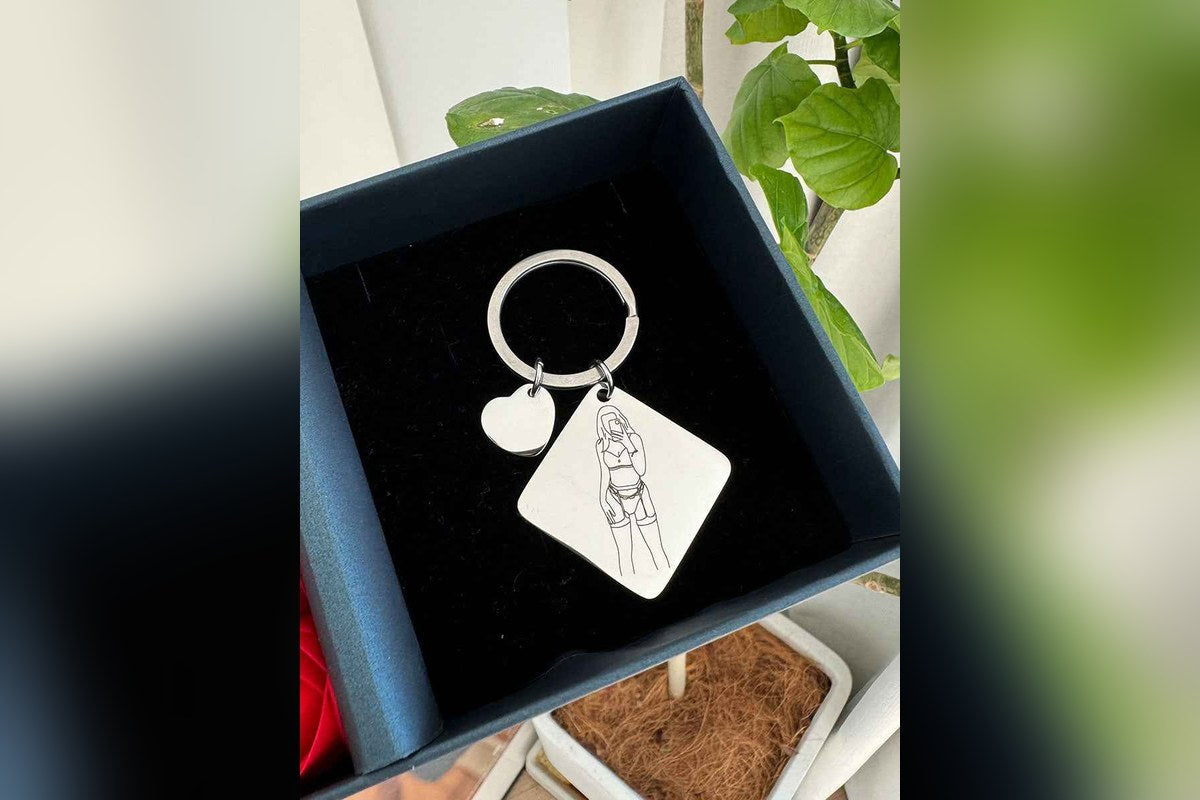
Some siblings like to turn that old photo into something one of them carries. Our Personalized Photo & Text Keychain turns a photo into an outlined line-art engraving with a few words of your choosing. "Front step, 1996" says a lot on a key ring.
Read and watch
- How Your Siblings Can Make You Happier by Jill Suttie (Greater Good Magazine).
- What Makes a Good Life? Robert Waldinger's TED talk on the Harvard study of adult development: relationships are what keep us well.
A note on families that hurt. Reconnecting isn't right for everyone. If a sibling relationship involved abuse, threats or control, protecting yourself comes first, and you deserve support. The National Domestic Violence Hotline (1-800-799-7233) also helps with family abuse. If you're in crisis, call or text 988 (988 Suicide & Crisis Lifeline).
Questions people ask
How do you reconnect with a sibling as an adult?
Start light (a shared photo or memory), do things side by side, set one regular plan, and get to know who they are now. If there's an old hurt, focus on one thing and on how you go forward.
How common is family estrangement?
In Karl Pillemer's national survey at Cornell, 27% of about 1,300 US adults said they were currently estranged from a relative.
Do sibling relationships get better with age?
Often. Greater Good notes that conflicted siblings' relationships commonly become less intense but warmer once they live independent adult lives.
Sources and further reading
- How Your Siblings Can Make You Happier by Jill Suttie, Greater Good Magazine (UC Berkeley)
- Got siblings? Strong bonds can help boost happiness, NPR (Shots)
- The Pain of Family Estrangement by Beth Saulnier, Cornellians (Cornell University)
- How To Mend A Family Rift, Evidence Based Living (Cornell University)
- Video: What Makes a Good Life? Lessons from the Longest Study on Happiness | Robert Waldinger | TED (TED, YouTube)
- National Domestic Violence Hotline: 1-800-799-7233
- 988 Suicide & Crisis Lifeline: Call or text 988
About Love & Advice. We're not therapists. We're a small team who make gifts for people in love, and we've listened to a lot of love stories. Nothing here is medical, psychological or legal advice; if something you're carrying feels heavy, please talk to someone trained to help. Have a question for Dear CustomLove? Ask us anonymously.


